
Colorado's Warranty of Habitability
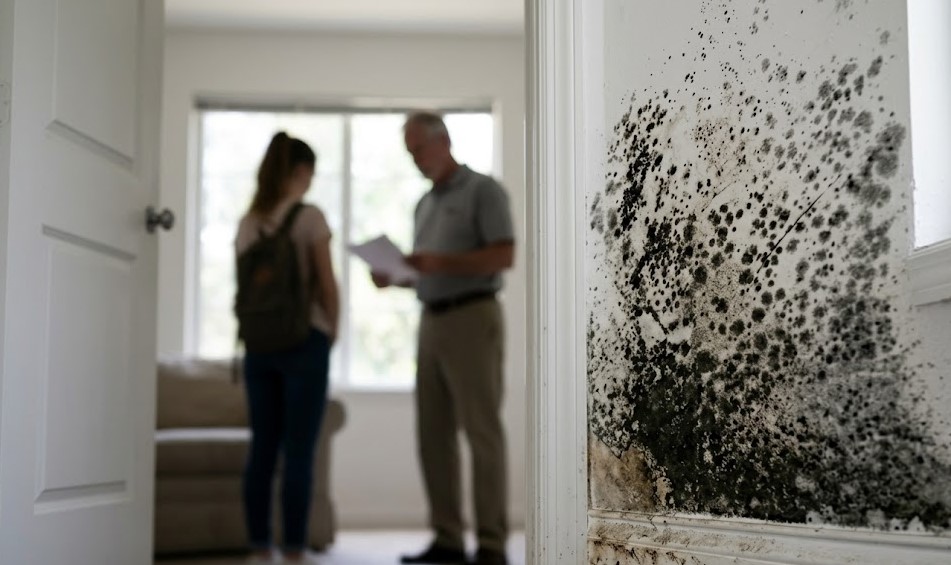
Under Colorado Revised Statutes § 38-12-503 (Warranty of Habitability), landlords must maintain rental units in a condition that is safe, sanitary, and fit for human habitation. Significant mold growth — particularly in living areas, bedrooms, HVAC systems, or any area that affects indoor air quality — qualifies as a habitability violation. For health context, see our overview of black mold health risks in Denver that triggers mandatory landlord action.
Landlord Mold Disclosure Obligations
Colorado law requires landlords to disclose known mold conditions to prospective tenants. If a landlord knows of existing mold and fails to disclose it before lease signing, the tenant may have grounds for lease termination and damages recovery.
What to Do When You Find Mold in Your Rental
- Document everything immediately. Photograph all mold growth with timestamps. Note locations, approximate square footage, and any odors. Our guide on signs of mold in a Denver home shows exactly what to look for and photograph.
- Notify your landlord in writing. Send a written notice (email with read receipt, or certified letter) describing the mold, its location, and requesting remediation. Keep copies.
- Identify the moisture source. If the mold resulted from a plumbing failure, roof leak, or building defect — the landlord is responsible. If it resulted from tenant behavior (failing to ventilate the bathroom, leaving wet clothes), the tenant may share responsibility.
- Allow reasonable repair time. Colorado law generally allows landlords reasonable time to respond after written notice. "Reasonable" depends on severity — active mold affecting health requires faster response than minor surface mold.
- Contact code enforcement if landlord doesn't respond. Denver, Boulder, Aurora, and other municipalities have housing code enforcement offices that can conduct inspections and issue violation notices.
Boulder-Specific Tenant Protections
Boulder's rental licensing and inspection program provides additional tenant protections beyond state law. Boulder landlords must maintain rental properties to city habitability standards, and tenants can request city inspections independently of landlord cooperation.
How Long Does a Landlord Have to Respond?
Colorado law does not specify a single fixed deadline, but courts and code enforcement agencies apply these practical standards:
| Severity | Reasonable Timeframe | Legal Basis |
|---|---|---|
| Mold affecting health (large colony, HVAC, health symptoms present) | 24–72 hours to begin remediation | Immediate habitability threat — C.R.S. § 38-12-507 |
| Significant visible mold (>10 sq ft, bedroom, living area) | 5–7 calendar days | Warranty of Habitability violation |
| Minor surface mold (small bathroom area, isolated spot) | 7–14 calendar days | General maintenance obligation |
| Assessment / inspection only (no visible mold, odor concern) | 14–30 days | Reasonable precaution obligation |
If the landlord does not respond within these timeframes, you have grounds to escalate — contact code enforcement, request rent abatement, or pursue other remedies under Colorado law.
Sample Written Notice to Your Landlord
Sending written notice is legally required before most tenant remedies become available in Colorado. Send via email with read receipt and certified mail, return receipt requested. Keep copies of both.
[Date]
[Landlord Name / Property Management Company]
[Address]
Re: Mold Condition at [Rental Address, Unit #] — Written Notice Under C.R.S. § 38-12-503
Dear [Landlord Name],
I am writing to formally notify you of a mold condition at my rental unit located at [address]. I discovered visible mold growth on [date] in the following location(s): [describe location, approximate size, and any associated odor or moisture — e.g., "the north basement wall, approximately 4×3 feet, with a persistent musty odor throughout the lower level"].
This condition may constitute a violation of Colorado's Warranty of Habitability under C.R.S. § 38-12-503. I am requesting written confirmation of your intended remediation plan within [5 / 7 / 14] calendar days of this notice, and completion of remediation within a timeframe consistent with the severity of the condition.
I have documented the mold with photographs (attached / available upon request). Please contact me at [phone / email] to arrange access for inspection and remediation.
If I do not receive a response within the timeframe stated above, I will contact [relevant code enforcement agency] and consider the additional remedies available to me under Colorado law, including but not limited to those provided under C.R.S. § 38-12-507.
Sincerely,
[Your Full Name]
[Date]
[Phone / Email]
This is a general template only — not legal advice. Consult a Colorado tenant rights attorney for guidance specific to your situation before sending formal legal notices.
Code Enforcement Contacts by City
| City | Agency | Phone |
|---|---|---|
| Denver | Denver 311 / Community Planning & Development | 311 or 720-913-1311 |
| Boulder | Boulder Building & Housing Inspection | 303-441-3148 |
| Aurora | Aurora Code Enforcement | 303-739-7900 |
| Lakewood | Lakewood Code Enforcement | 303-987-7900 |
| Arvada | Arvada Code Enforcement | 720-898-7420 |
| Thornton | Thornton Neighborhood Services | 303-538-7000 |
| Westminster | Westminster Code Compliance | 303-658-2100 |
| Highlands Ranch | Douglas County Code Compliance | 303-660-7460 |
When Is Mold the Tenant's Responsibility?
Not all rental mold is the landlord's fault. Colorado courts look at the moisture source when determining liability:
| Moisture Source | Who Bears Responsibility |
|---|---|
| Foundation crack, building envelope failure, roof leak | Landlord |
| Plumbing leak landlord was notified of and failed to repair | Landlord |
| HVAC failure or insufficient ventilation in unit | Landlord |
| Tenant never uses bathroom exhaust fan → chronic steam accumulation | Tenant (shared or full) |
| Tenant consistently dries laundry indoors on racks | Tenant |
| Tenant delayed reporting a known plumbing leak for weeks | Shared — tenant worsened the damage |
| Tenant left windows open during rain → water damage | Tenant |
If you are disputing responsibility, document the moisture source with photographs and — if possible — obtain a professional mold inspection report that identifies the moisture pathway. This is the most important evidence in any landlord-tenant mold dispute.
This article provides general information about Colorado tenant rights and is not legal advice. Consult a licensed Colorado attorney for advice specific to your situation.