
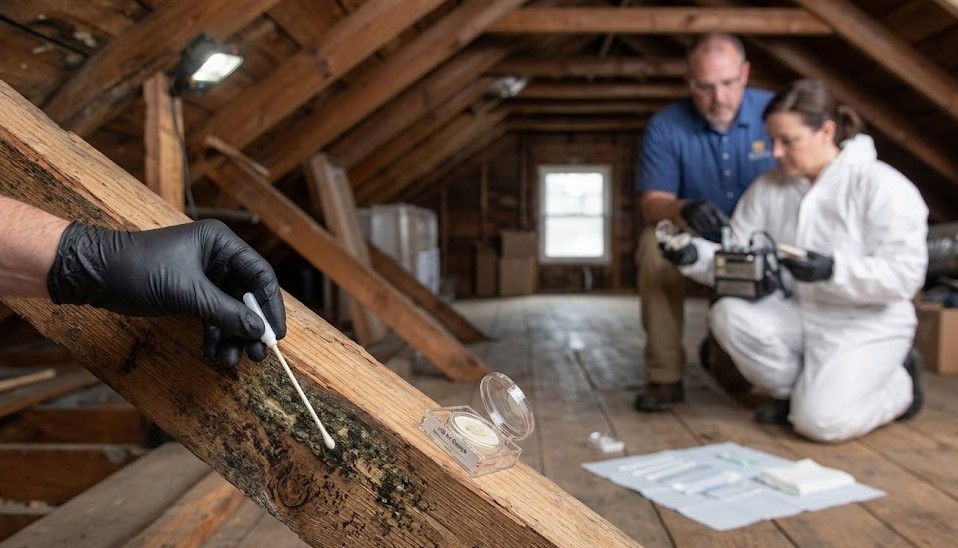
Mold Inspection: What It Is
A mold inspection is a visual assessment performed by a trained inspector to identify visible mold growth, moisture sources, and conditions favorable to mold growth. The inspector uses moisture meters, thermal imaging cameras, and visual examination to locate mold and identify the moisture pathway that enabled it. A good mold inspection also documents findings for insurance or real estate disclosure purposes.
Cost in Denver: $300–$600 for a residential inspection
When you need it: Visible mold, musty odor, pre-purchase or pre-sale, after water damage
Mold Testing: What It Is
Mold testing uses laboratory analysis to identify mold species and quantify spore concentrations. Common methods include:
- Air sampling (spore trap): Captures airborne spores on a cassette — identifies what species are in the air and at what concentration
- Surface swab sampling: Collects a sample from a visible mold colony to identify the specific species
- Bulk sampling: Sends a physical piece of material (drywall, wood) to the lab for analysis
- ERMI testing: Collects settled dust to assess long-term mold history in a space
Cost in Denver: $100–$300 per sample + $200–$400 lab fees; clearance testing $300–$600
When you need it: When you can smell mold but not find it; to confirm species for health purposes; post-remediation clearance
The Denver Altitude Factor in Air Sampling
Air sampling pumps are calibrated for sea-level air density. At Denver's 5,280 ft elevation, air is approximately 17% less dense. A pump set to collect air at a sea-level calibrated rate will actually collect 17% less air volume at altitude — resulting in artificially low spore counts. Denver mold inspectors must apply altitude correction factors to their pump flow rates to ensure accurate, defensible air sampling results.
How to Choose a Reputable Mold Inspector in Denver
Not all mold inspectors have equivalent training. Look for these specific credentials — and watch for the red flags below:
Certifications to Look For
- IICRC CIE (Certified Indoor Environmentalist) or IICRC CMR (Certified Mold Remediator) — the most recognized industry certifications. Verify at iicrc.org.
- ACAC CMIEC (Council-certified Microbial Investigator/Environmental Consultant) — specialized in indoor air quality investigation.
- AIHA-LAP accredited laboratory — if testing is part of the service, confirm that samples are sent to an AIHA-LAP accredited lab for analysis.
The Conflict of Interest Problem
In Colorado, the same company can legally perform both mold inspection and mold remediation. This creates a financial incentive to find (or overstate) mold problems. Best practice: hire a separate company for inspection and for remediation. If a company that inspects also recommends its own remediation service, get a second opinion from a remediation-only contractor before authorizing work.
Red Flags in Mold Inspection Companies
- No specific mold certifications listed — "licensed contractor" alone is not a mold credential
- Refuses to provide a written inspection report or provides only a verbal summary
- Recommends immediate remediation without a written scope-of-work
- Uses generic pricing ("mold testing from $99") without explaining what is included
- Cannot name the laboratory where samples will be analyzed
- Arrives with remediation equipment on the first inspection visit
5 Questions to Ask Before Hiring a Mold Inspector
- "What certifications do you hold, and can you verify them?" — Ask for the certification number and check the certifying body's website.
- "Which laboratory will analyze my samples, and is it AIHA-LAP accredited?"
- "Will I receive a written inspection report with findings, photographs, and recommendations?"
- "Do you also perform mold remediation, or are you inspection-only?" — If they do both, ask about their conflict-of-interest policy.
- "Do you apply altitude correction to your air sampling equipment?" — An experienced Denver inspector should know immediately what this question means.
What Your Inspection Report Should Include
A professional mold inspection report should contain, at minimum:
- Inspector's name, certification number, and certification body
- Date of inspection and property address
- Scope of inspection — what was and was not assessed
- Findings: location, approximate area, and visual description of all identified mold
- Moisture readings from affected areas (with specific readings, not just "elevated")
- Identified or suspected moisture source(s)
- Laboratory report if testing was performed (with chain of custody documentation)
- Remediation recommendations — scope, priority, and any required moisture source repairs
- Photographs of all findings
If a report is missing any of these elements, it may be inadequate for insurance claims, real estate disclosure, or legal purposes. A complete residential inspection report typically runs 5–15 pages.
Prices shown are examples only ($300–$600 inspection, $100–$300/sample). For an accurate quote for your property, call (720) 964-0332 — free specialist consultation.