
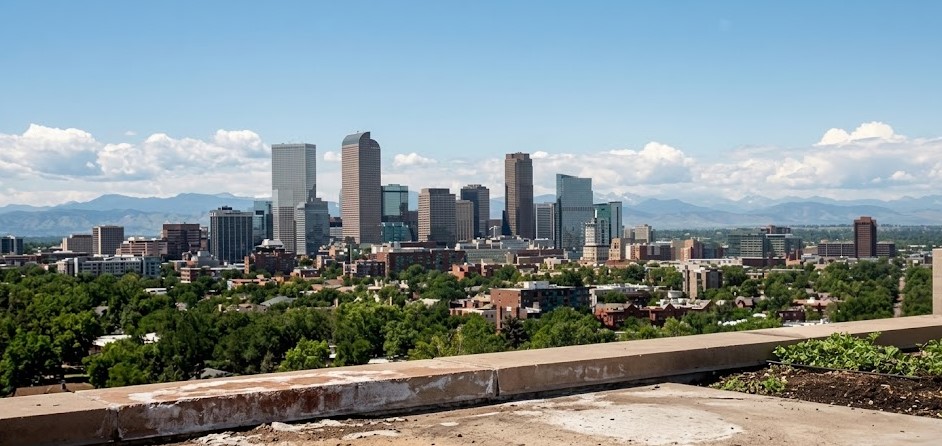
The Dry Climate Misconception
Denver averages just 14.3 inches of annual precipitation and outdoor relative humidity frequently drops below 20% during winter months. This leads many homeowners to conclude that mold simply isn't a Denver problem. But mold doesn't grow from outdoor air — it grows from localized moisture sources: plumbing leaks, condensation on cold surfaces, and water intrusion through foundation walls and rooflines.
Denver's Three Primary Mold Drivers
1. Snowmelt Flooding (March–May)
Colorado's mountain snowpack — averaging 100+ inches in the mountains feeding the South Platte watershed — releases massive volumes of water in compressed spring melt windows. When 300 inches of mountain snowpack melts into the Denver metro within 6–8 weeks, the volume of water seeking drainage pathways overwhelms foundation drainage systems, window wells, and sump pumps.
Denver Formation clay soil (the dark gray expansive clay underlying most of the metro) absorbs snowmelt and holds it against foundation walls for weeks, creating sustained hydrostatic pressure that drives water through foundation cracks and porous concrete block — a primary driver of Denver basement mold.
2. 170+ Annual Freeze-Thaw Cycles
Denver experiences approximately 170–200 freeze-thaw cycles annually — days where temperatures cross 32°F in both directions. Each cycle expands and contracts concrete and masonry, slowly widening microscopic cracks into moisture pathways. After 20–30 years, these cumulative micro-cracks create foundation walls that are effectively porous to snowmelt moisture.
3. Whole-Home Humidifiers
Denver's dry climate drives nearly universal installation of whole-home humidifiers on forced-air systems. These units are essential for comfort — but when miscalibrated to deliver too much humidity at cold outdoor temperatures, they deposit excess moisture on cold structural surfaces (rim joists, sheathing, cold exterior walls). This localized humidity, even in an otherwise "dry" home, creates ideal mold growth conditions at 70%+ relative humidity.
| Outdoor Temp (°F) | Recommended Indoor RH | Risk if Exceeded |
|---|---|---|
| Above 20°F | 35% | Condensation on walls |
| 10°F to 20°F | 30% | Window condensation → mold |
| 0°F to 10°F | 25% | Rim joist moisture |
| Below 0°F | 20% | Attic sheathing mold |
Denver Mold Risk Calendar
| Month | Primary Mold Risk | Action to Take |
|---|---|---|
| January–February | Humidifier overcalibration → rim joist, attic condensation mold | Adjust humidistat downward during cold snaps; inspect rim joist insulation |
| March | Early snowmelt → foundation seepage, window well flooding | Clear window well drains; check sump pump function |
| April | Peak snowmelt + rain → basement flooding, creek corridor flooding | Highest vigilance; 48-hour response protocol if any water entry occurs |
| May | Continued melt + thunderstorm season; mold from April events now visible | Inspect basement for signs of March–April moisture; schedule assessment |
| June–August | Afternoon thunderstorms → window leaks, flat roof ponding; construction-phase moisture risk | Inspect window seals; check flat roof drains after storms |
| September | First fall moisture; humidifier season begins | Replace humidifier water panel; calibrate humidistat |
| October–November | Early cold snaps → pipe freeze risk; humidifier mold if overcalibrated | Insulate exposed pipes; monitor humidity vs. outdoor temp |
| December | Ice dam formation begins with first heavy snow and warm days | Check attic insulation; assess ventilation before first major snowfall |
Which Denver Areas Have the Highest Mold Risk?
Within the Denver metro, mold risk is not uniform. These factors increase local risk beyond the metro baseline:
- Older neighborhoods (pre-1970 construction): Central Denver, Englewood, Wheat Ridge, and Edgewater have housing stock with 50+ years of freeze-thaw foundation cycling. Foundation walls in these homes have developed significantly more moisture pathways than newer construction.
- Creek corridors: Properties within 500 feet of Cherry Creek, Clear Creek, Bear Creek, South Platte, and Ralston Creek have elevated flooding risk during April–May peak melt.
- Denver Formation clay areas: Most of the central metro sits on expansive Denver Formation clay — areas at lower elevations with heavy clay content retain snowmelt against foundations longest.
- Higher-elevation suburbs: Castle Rock (6,224 ft), Parker (5,869 ft), Golden, and the Boulder foothills experience more severe ice dam formation due to greater snowfall and sharper temperature cycling.
Denver Mold Causes — Topic Cluster
Dive deeper into each Denver-specific mold cause: